
 Free Estimate
 24-Hour Priority Scheduling
 Serving Minnesota Since 1971
 100% Satisfaction Guaranteed

Carpenter Ant Control Minnesota
Professional Wood-Destroying Ant Elimination & Structural Protection
Are Large Black Ants in My Home Carpenter Ants — and Are They Damaging the Wood?
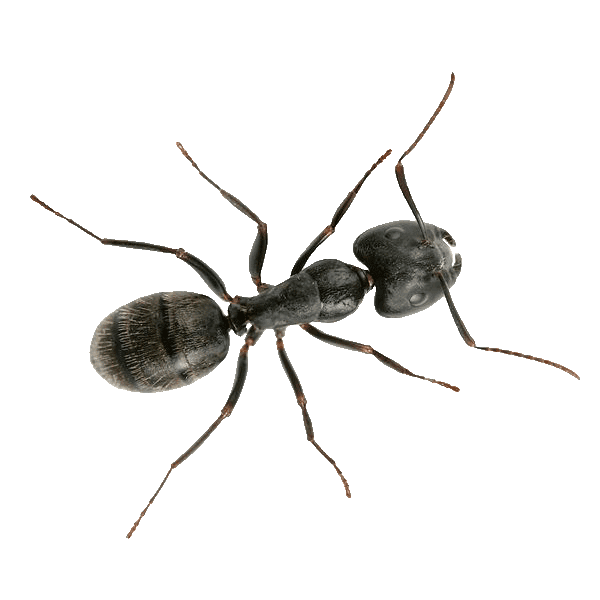
Carpenter ants (Camponotus spp.) are the largest ants in Minnesota and one of the most destructive household pests in the state. Unlike other ants, they tunnel through wood to build their nests — hollowing out structural lumber, wall framing, floor joists, and window sills over months and years. Finding large black ants inside your home, especially at night or in spring, is a serious warning sign that requires professional inspection.
Large black ants in your walls or attic? Adam's finds and eliminates the colony.
Call 763-746-9510 or click 'Get Free Estimate' — licensed Pest Management Professionals with same-day/next-day priority service available.
Why Do Carpenter Ant Infestations Require Professional Treatment?
Carpenter ant infestations require professional treatment because they cause direct structural wood damage, operate from hidden parent and satellite nest systems, are closely tied to moisture problems that worsen over time, and cannot be eliminated with consumer products that only kill surface workers.
Structural Wood Damage
Carpenter ants do not eat wood — they excavate it. Workers chew smooth galleries and tunnels through lumber to house the colony's eggs, larvae, and pupae. Over time, colonies hollow out wall studs, floor joists, roof rafters, window sills, and door frames. Damage accumulates over years and may not be visible until structural failure occurs. Unlike termite damage, carpenter ant galleries are clean and smooth, which is a diagnostic marker professionals use during inspection.
Parent Nest and Satellite Nest System
Carpenter ant colonies operate through a multiple-nest system. The parent (primary) nest is located outdoors in moist or decayed wood: tree stumps, fallen logs, landscape timbers, or fence posts. The satellite nests are established indoors in wall voids, attics, crawl spaces, or behind bathroom tiles — wherever moisture is present. Workers travel up to 100 yards between nests. Professional treatment must target both the parent and all satellite nests to achieve control; treating only the indoor satellite nest(s) leaves the colony intact.
Moisture Damage Connection
Carpenter ants are attracted to wood with more than 15% moisture content. Their presence indoors is almost always associated with an underlying moisture problem: roof leaks, plumbing leaks, condensation in wall voids, or moisture-damaged window and door framing. Professional inspection identifies both the ant infestation and the moisture conditions that sustain it. Eliminating ants without correcting the moisture source leads to rapid re-infestation.
Colony Size and Consumer Product Failure
Mature carpenter ant colonies contain 2,000 to 4,000 workers and take 3 to 6 years to develop. Consumer sprays kill foraging workers on contact but never reach the queen deep in the nest. The colony remains intact and workers are replaced within days. Professional-grade non-repellent insecticides are carried back to the nest by foraging workers, transferring the active ingredient to the queen and colony — producing complete colony collapse rather than surface-level knockdown.
 Spring Swarmers = Established Colony
Seeing large black ants in spring, particularly winged swarmers, means a mature colony is nearby. Spring swarmers indoors are one of the most reliable signs of an established carpenter ant colony in your structure. Call 763-746-9510 for professional identification.

How Does Adam's Eliminate Carpenter Ant Colonies?
Adam's eliminates carpenter ant infestations through a three-step process: thorough inspection to locate parent and satellite nests, targeted colony elimination using professional-grade materials, and ongoing prevention to stop re-establishment from new colonies.
- Inspection & Nest Location — Licensed technicians perform a detailed interior and exterior inspection. Indoors, the technician looks for active ants, frass deposits, hollow-sounding wood, moisture-damaged areas around plumbing and windows, and evidence of wood excavation. Outdoors, the inspection focuses on tree stumps, landscape timbers, firewood piles, fence posts, deck framing, and any wood-to-soil contact near the structure.
- Targeted Colony Elimination
- Wall void treatment: Dust and non-repellent insecticide applied directly into wall voids, attic spaces, and other indoor satellite nest sites
- Direct nest treatment: Parent nest and satellite nest sites treated with professional-grade materials that foraging workers carry back to the colony
- Perimeter treatment: Non-repellent exterior barrier applied to foundation, siding, eaves, and entry points to intercept foraging workers and prevent new entry
- Crack-and-crevice treatment: Utility penetrations, window and door frames, and other structural entry points treated to close foraging routes
- Prevention
- Ongoing perimeter treatment prevents re-infestation from neighboring colonies
- Moisture source identification with recommendations for corrective action
- Entry point sealing guidance for gaps around utilities, windows, and doors
- Tree and vegetation management recommendations to eliminate outdoor harborage near the structure
Seeing ants in your walls at night? Call 763-746-9510 for a professional carpenter ant inspection.
How Do Carpenter Ants Compare to Other Minnesota Ant Species?
Carpenter ants are frequently confused with field ants, pavement ants, and cornfield ants. Correct species identification determines the treatment strategy, nest location, and risk level to your home.
Carpenter Ant
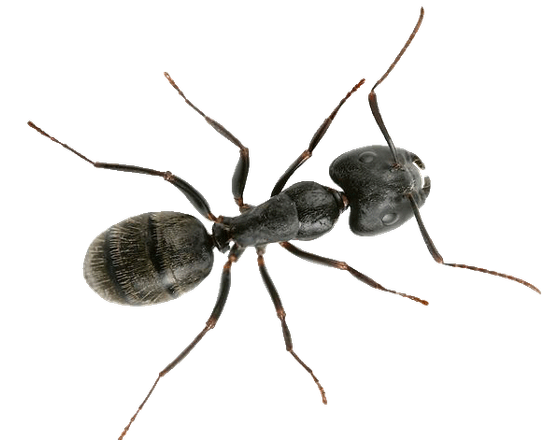
Field Ant
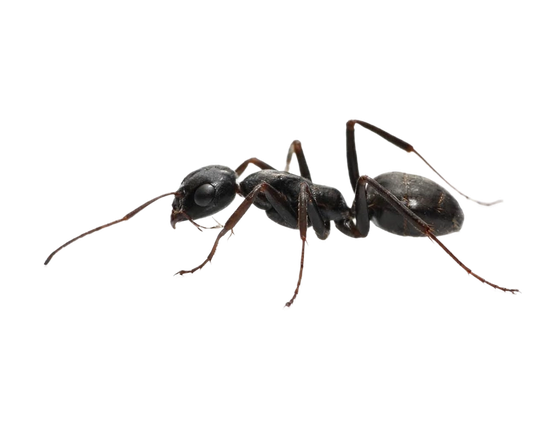
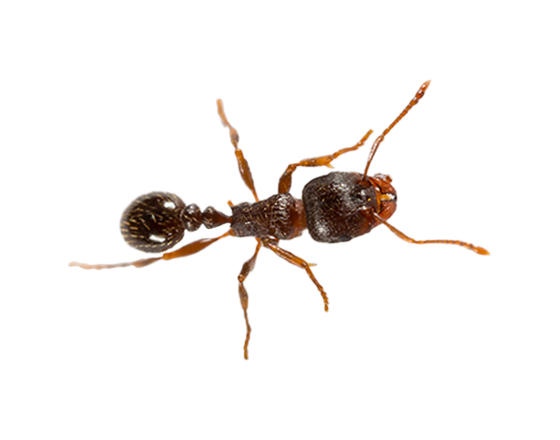
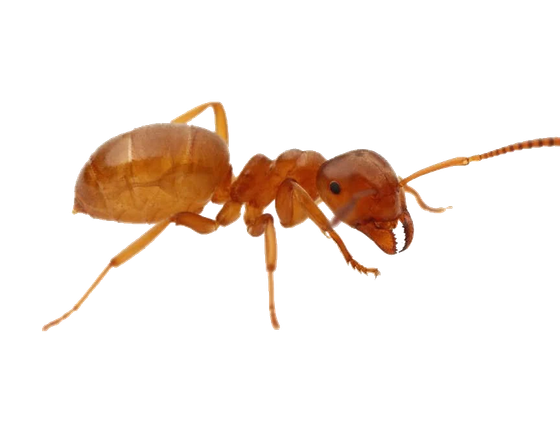
Not sure which ant you have? Call 763-746-9510 or save a sample for our Board-Certified Entomologist, Dr. El Damir.
What Are the Signs of a Carpenter Ant Infestation?
The most common signs of a carpenter ant infestation include large black ants seen inside the home at night, piles of sawdust-like frass near baseboards or window sills, and spring swarmers emerging from walls or ceilings.
- Large black ants indoors at night: Carpenter ants forage from sunset to midnight. Finding large (1/4–1/2 inch) black ants in kitchens, bathrooms, or along baseboards after dark is the most common first sign
- Frass deposits: Piles of coarse, sawdust-like material mixed with dead insect parts, soil, and debris beneath wall openings, window frames, or floor voids. Frass is the carpenter ant's excavated material ejected from the nest through small holes
- Spring swarmers indoors: Winged reproductive carpenter ants (swarmers) emerging from walls, floors, or window frames in April–June is a definitive sign of a mature colony established inside your structure
- Hollow or soft wood: Wood framing, sills, or structural members that sound hollow when tapped or feel soft when probed may contain carpenter ant galleries
- Rustling sounds in walls: Active galleries in wall voids can produce faint rustling or crackling sounds at night when worker activity is high
- Moisture damage near nesting sites: Staining, soft wood, or peeling paint around windows, doors, roof penetrations, or plumbing areas is a reliable indicator of conditions that attract carpenter ants
- Ant trails at night: Worker ants follow pheromone trails between outdoor parent nest and indoor satellite nest. Trails are most visible near sunset, along foundation edges, tree branches, and utility lines entering the structure
Frass Is Not Termite DamageCarpenter ant frass is coarse and chunky, containing insect parts. Termite frass (droppings) is fine, pellet-like, and uniform. If you are unsure, save a sample and call 763-746-9510 for identification by Dr. El Damir.
What Are Adam's Carpenter Ant Control Programs?
Adam's offers carpenter ant treatment and ongoing prevention programs. Ongoing ant treatment starts as low as $159 per treatment.
One-Time Carpenter Ant Treatment
Active carpenter ant infestation, immediate structural protection
Call for pricing
1 visit
- Best for: Active carpenter ant infestation, immediate structural protection
- 3-month warranty
Premier Ant Prevention (2x)
Ongoing carpenter ant prevention — spring pre-season and mid-summer follow-up
From $159/treatment
2 visits/year
- Best for: Ongoing carpenter ant prevention — spring pre-season and mid-summer follow-up
- Year-round guarantee
Premier Perimeter Pest (3x)
Carpenter ants + common household pests
Call for pricing
3 visits/year
- Best for: Carpenter ants + common household pests
- 12-month guarantee
Premier Home Pest Prevention (4x+)
Complete protection — carpenter ants, mice, wasps, seasonal pests & more
Call for pricing
4+ visits/year
- Best for: Complete protection — carpenter ants, mice, wasps, seasonal pests & more
- Year-round guarantee + unlimited service calls
Pricing varies based on home size and pest conditions. 24-Hour Priority Scheduling available in the 7-county Twin Cities metro.
Not sure which program is right for you?
Call 763-746-9510 or click 'Get Free Estimate' to talk with one of Adam's friendly, knowledgeable customer service agents.

Why Do Minnesota Homeowners Choose Adam’s for Carpenter Ant Control?
- Licensed & Certified: State-licensed technicians with advanced training in wood-destroying insect identification and structural inspection
- Board-Certified Entomologist: Dr. El Damir provides expert identification — critical for distinguishing carpenter ants from other large ant species and confirming nest type
- Local Expertise Since 1971: Over 50 years serving Minnesota homeowners — Adam’s understands seasonal activity patterns, local species, and the moisture conditions unique to Minnesota construction
- Multiple-Nest System Treatment: Adam’s inspects and treats both parent and satellite nests, targeting the entire colony rather than surface foragers alone
- Professional-Grade Non-Repellent Products: Materials unavailable to consumers that workers carry back to the nest, reaching the queen and achieving complete colony elimination
- Moisture Assessment Included: Every inspection includes identification of moisture and other conditions that sustain carpenter ant activity — addressing root causes, not just symptoms
- No-Obligation Free Estimates: Zero pressure — call when you’re ready
What Can I Do About Carpenter Ants Before the Technician Arrives?
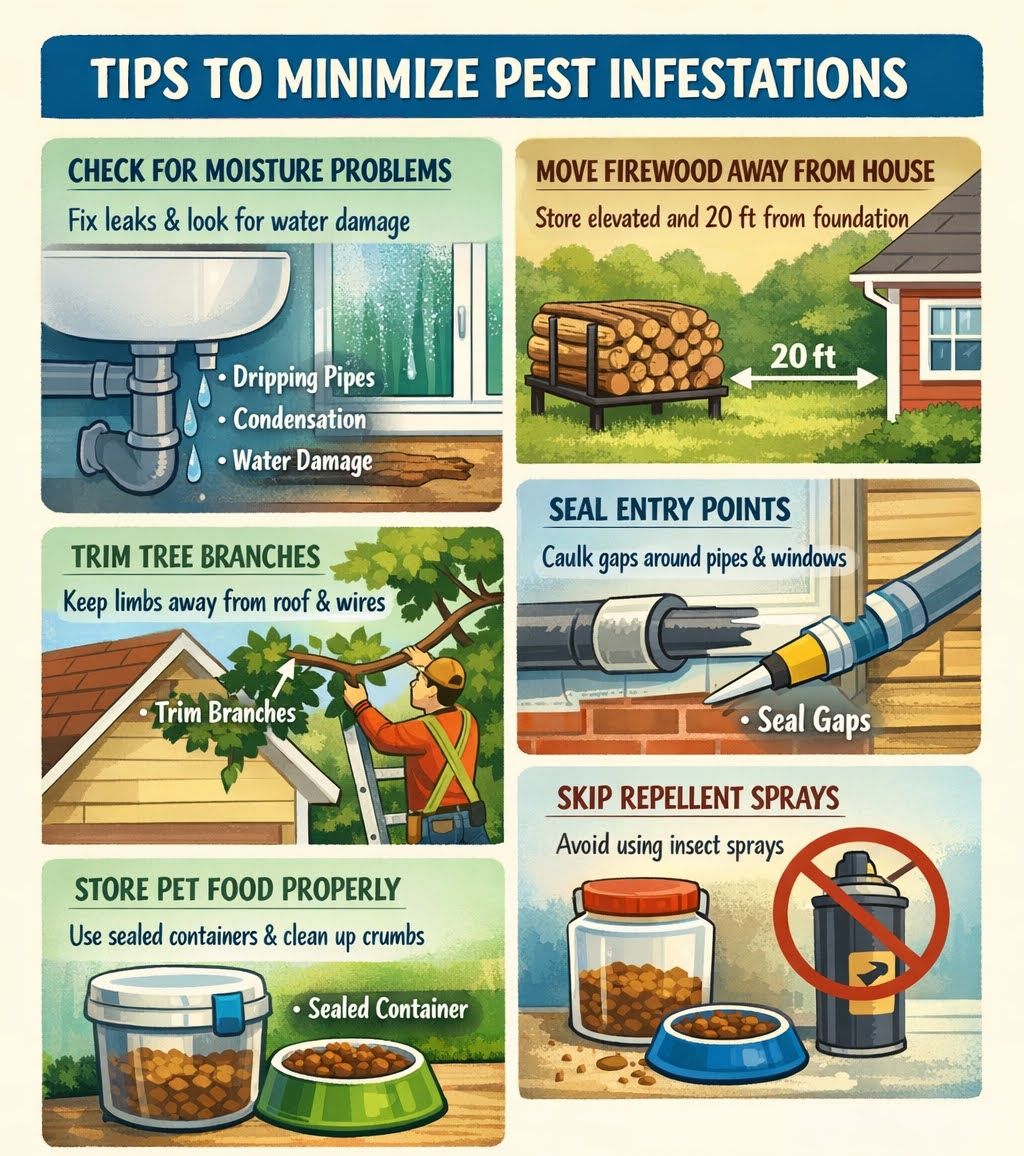
While you wait for your Adam's appointment, these steps help your technician locate the nest and improve treatment results:
- Note where and when you see ants — especially after sunset, when foraging activity is highest
- Photograph or save frass samples in a sealed bag for the technician to examine
- If you see spring swarmers, save several in a sealed bag — this confirms a mature colony is established in the structure
- Check for moisture problems: dripping pipes under sinks, condensation around windows, soft or discolored wood near plumbing
- Move firewood away from the foundation and elevate it off the ground
- Trim tree branches that contact the roofline, siding, or utility lines
- Seal obvious entry points around utility penetrations and window frames with caulk if possible
- Keep pet food in sealed containers and clean up food debris that may attract foraging workers
Do NOT spray foraging ants with over-the-counter aerosol sprays. These products are repellent — they scatter the colony, making nest location more difficult, and rarely eliminate the queen. Surface sprays provide only temporary, cosmetic relief.
Do NOT attempt to locate the nest by probing walls or structural members. Disturbing the colony can cause workers to relocate the satellite nest deeper into the structure.
Critical: Do not apply repellent sprays before professional service. Repellent products disrupt foraging trails that technicians follow to locate nests. This significantly reduces treatment effectiveness and can push colonies deeper into your structure.
Protect Your Home's Structure. Eliminate the Colony.
Schedule within 24 hours • Licensed professionals • Serving Minneapolis, St. Paul & Twin Cities
Carpenter Ant Control Questions
Ongoing carpenter ant treatment from Adam's starts as low as $159 per treatment. Pricing depends on home size, degree of infestation, and number of nest sites. All services include free inspection and species identification. Call 763-746-9510 for your free estimate.
Get Your Free Carpenter Ant Inspection Today
Schedule within 24 hours • Licensed professionals • Serving Minneapolis, St. Paul & Twin Cities metro
Identify the nest. Eliminate the colony. Protect your home's structure.
Or complete this form for an online quote 24/7: